Showing posts with label News. Show all posts

Friday, January 28, 2011

Today in History

There are lots of websites that will give you a breakdown of what HISTORIC events happened on this day in the past:


Each will give you some random facts about events that have changed or influenced our history, and some that have been forgotten by history.

So yesterday, I was scrambling through the History.com site and read through what's happened this week in history, and came across an image that sparked a memory i hadn't thought about in a very long time.

http://www.history.com/this-day-in-history/challenger-explodes

On January 28th 1986, way before most of you who will read this post were even born, the space shuttle Challenger exploded during its take off. I remember this vividly for a number of different reasons.

1) I was on a school tour of the NY newspaper "The Daily News".
2) We paused during the tour to watch the liftoff along with a ton of journalists and reporters on the TV's.
3) I had never witnessed a space shuttle launch before.
4) Christa McAuliffe

 I recall Christa because she wasn't an astronaut - she was a school teacher. And she didn't even teach math or science - she was a social studies teacher.

NASA had this idea that if they gave the opportunity to train with astronauts and actually fly into space to everyday folks, it might stir up some interest in the space program again. Because let's be honest, unless you are already a fan of space travel, you likely don't remember anything NASA related since we landed on the moon the first time. The result: The Teacher in Space Project.

Over 11,000 teachers applied for the chance to put on a real-live space suit, but it was Christa who won over the selection committee. NASA official Alan Ladwig said "she had an infectious enthusiasm" (from Wikipedia).

It was that infectious enthusiasm that endeared her to the public. Tons of kids dream of becoming astronauts, but that number starts dwindling fast when they find out how long and hard road is to get there. It makes space seem even father away then it already is. Something us average folks will never get a chance at.

Christa reminded me and my classmates and people all over the country of that enthusiasm we once had. For the possibility of...well, almost anything. NASA's plan worked - it seemed to me like the entire world had tuned back in to the space program. Everyone was behind Christa and cheering her on. She was even going to teach a couple lessons from space.

The morning of the space shuttle launch, there were people jumping up and down, dozens of signs and posters - not just at the actual launch site, but everywhere that large groups had gathered around television sets to watch one of "us" head into the atmosphere and then out of this world. Everyone counted down with the TV announcers and screamed with joy as the shuttle fired and took off. It was actually happening.

That excitement didn't last for much more than a minute. I remember seeing all the kids around me. We were huddled in tight like we were trying to conserve body heat in a winter storm. And a wave of cold shock hit us all, 73 seconds after takeoff, when the Space Shuttle Challenger exploded. There were no survivors.

At first, it was like time had stopped. Some mouths hung open, others had been clutched by hands. We all stood and watched in disbelief. For us kids, it would have been sad no matter what, but a teacher had been on the shuttle. She could've been our teacher...and that thought was just too close for comfort. A moment later, the newsroom went ballistic as journalists and reporters all ran rampant, grabbing ringing phones and getting to work on telling the story of what had just happened.

I personally don't recall anything about the rest of the tour. But it was all over the news for days. Eventually the attention moved on. Later that year there were scholarships and schools named after Christa McAuliffe and in her honor. I didn't know her, but i felt like i did. I haven't watched any NASA related stuff on the news since.

Teen Link Staff Member

Wednesday, July 7, 2010

Big Oil Blunder

The Worst Man-Made Environmental Disasters:

Just how bad is the Deepwater Horizon oil spill? With a significant amount of oil still flowing through deep undersea currents, out of sight, the consequences will not be known for some time.

Some are even wondering if the spill heralds the apocalypse. In fact, the incident that began with an explosion on BP’s Deepwater Horizon drilling rig is not even the worst oil spill in the history of the Gulf of Mexico, which was already one of the most oil-polluted bodies of water in the world. Despite its untold economic and environmental impacts, it likely will not inflict the human toll of the world’s ugliest environmental catastrophes.

To assign the title of “worst disaster” would be to risk trivializing tragedy: all environmental disasters are terrible and worth remembering. But as we consume the well-justified avalanche of news about the spill in the gulf, let’s do so with a dose of context.

Here’s how the Deepwater Horizon spill stacks up against previous environmental accidents:  

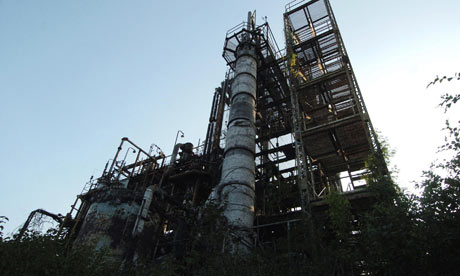
Bhopal, India, Gas Leak
On a December morning in 1984, a cloud of toxic gas leaked from a pesticide plant in Bhopal, India, killing more than 3,000 people in a span of days and poisoning hundreds of thousands more in the years to come. The Indian government’s count of fatalities caused by the accident stands at about 15,000, making it the deadliest man-made environmental disaster in history.

The Deepwater Horizon spill has, at the moment, killed 11 oil rig workers who died in the explosion on April 20. It is also expected to devastate marine life in wide swaths of the Gulf of Mexico. As scientists told NEWSWEEK’s Sharon Begley, the economic and environmental impact of undersea oil plumes could reach far beyond what the toxic cloud in India did to Bhopal, a city of about 800,000. While the initial cloud of gas at Bhopal killed livestock and stripped trees bare in and around the densely populated slums that immediately surrounded the plant, the worst environmental impact of the explosion in Bhopal was more nefarious: the BBC returned to the site 20 years later and found dangerous chemicals stored haphazardly at the former factory. Groundwater was contaminated to levels known to cause serious health problems, but locals were (and apparently still are) drinking water they believed to be toxic because they had no other choice.

Like Union Carbide (now owned by Dow Chemical), BP and its corporate partners will face billions of dollars in legal claims. This month, eight former Union Carbide officers were convicted of criminal negligence.

London’s ‘Great Smog,’ 1952
For four days in December 1952, a thick, acid-infused smog engulfed London like an overturned saucer. Stagnant air trapped fumes from coal stoves, gas-burning cars, and industrial emissions. Day turned to darkness, and visibility dropped, at times, to a mere foot. An estimated 4,000 people died in a single month from the immediate effects of the toxic air on their respiratory system, while 8,000 additional deaths were later attributed to the smog. Sulfur dioxide in the air was believed to be the main culprit.

Much of what is known about this awful spell of air pollution documents its devastating impact on humans—written accounts make little mention of long-term environmental harm. That makes it difficult to measure against the catastrophe unfolding in the gulf, where entire ecosystems are at risk but where human victims will probably feel the worst impact in their pockets, not their lungs. The smog did spur the British Parliament to pass the Clean Air Act, allowing authorities to control the use of coal fuel in certain areas to mitigate the risk of future smog.

Ixtoc Blowout, 1979
News reports on the 1979 blowout of an undersea oil well off the Gulf of Mexico seem all too familiar today. There was a failure of the “blowout preventer,” an undersea fail-safe device that is supposed to close off a gushing pipe. There were frustrated reports about the Mexican government vastly underestimating the volume of oil gushing from the seabed, much like the lowball guesses from BP in April.

Day after day for a span of 10 months, a torrent of oil rushed into the Gulf of Mexico after the initial explosion near the Yucatan Peninsula. The spill was checked only in part by a cap that was lowered over the leak to siphon off a portion of the flow. After four months an oil slick had covered about half of Texas’s 370-mile gulf shoreline, devastating tourism. Only by drilling two relief wells to connect to the initial hole, then pumping mud and concrete into the gushing pipe could Petroleos Mexicanos, or PeMex, Mexico’s national oil company, stop the leak.

“The accident does suggest that blowout prevention equipment is not designed to handle the worst emergencies,” The New York Times wrote in an April 1980 editorial after the leak was finally capped. “Could a blowout in American waters be quickly capped and cleaned up?”

By the easiest measure—volume of oil spilled—PeMex’s Ixtoc I oil well was far worse than the Deepwater Horizon well: 140 million gallons of oil poured out of the Mexican well, compared to the estimated 94.2 million gallons that could escape from the well near Louisiana by mid-August, when a relief well is expected to be complete. (The worst oil spill in history occurred in 1991, when the Iraqi army ripped apart Kuwait’s oil infrastructure and released more than 252 million gallons during the Persian Gulf War. The Exxon Valdez crash in 1989 released 10.9 million gallons.)

But unlike Deepwater Horizon, the Ixtoc I disaster occurred in 150 feet of water and a fortunate turn in winds and currents mitigated its impact on the coastline. Today, researchers using submersibles continue to detect massive plumes of oil rising from the depths. No one has ever observed what happens when oil gushes from the sea floor 5,000 feet down, and residents along the entire gulf coast are still nervously awaiting what currents and winds Mother Nature has in store this summer.

Chernobyl Nuclear Power Plant Explosion, 1986
In April 1986 an explosion at the core of a nuclear reactor at the Chernobyl power station released more than 50 tons of radioactive material into the atmosphere above Ukraine. About 350,000 people had to be evacuated from the area, leaving villages and an entire city, Prypriat, abandoned. Estimates of deaths and radiation-related illnesses from the incident vary widely: a United Nations study found that by 2005 there had been 59 deaths directly related to the incident, while Ukrainian officials have said that during the cleanup following the blast, more than 4,000 people died and 70,000 were disabled by radiation-related illness.

Deepwater Horizon’s best historical parallel might indeed be Chernobyl. That accident set back nuclear power in Europe much as the Deepwater Horizon spill has torpedoed momentum toward what was to be an expansion of deep-ocean drilling in the U.S. “We were just getting to the point where we could think about talking about drilling off parts of Florida, off the Atlantic coast,” said Byron King, an oil analyst with Agora Financial and contributor to The Daily Reckoning. “Within moments of the news hitting the wires, people were like … ‘Not off my coast.’ ”

So what’s an oil spill to us teenagers? This oil spill, to me, not only produces a solid tangible image of our nation’s dependence on fossil fuels but the greed and sorrow that come along with it. 


From a  biological standpoint…we are killing. The effect on the wildlife in the gulf is monstrous and irreversible. We dump what is left over from our cars into the oceans. Then we dig our greedy fingers into what the ocean has left to offer to get more fossil fuels to fill our desire for speed, comfort, and war. Is there anything we can do to help?
We can monitor our carbon footprint, even cut down on using are cars for distances we can walk or ride a bike. To Kill two birds with one stone, eliminate the over use of gases and become a better person for it.

Thursday, June 10, 2010

Better get your hands free...

Beginning today,June 10th a new law comes into effect for Washington State that we anticipate is going to have some pretty heavy consequences.
As of Thursday, cops and state troopers can stop AND TICKET drivers who are talking on cellphones or texting while driving. Anyone using a cell-phone while driving without using a "hands-free" device can receive a $124 ticket.

Just so there's no misunderstandings on this matter:
TALKING ON YOUR CELL, READING TEXTS, WRITING TEXTS, and SENDING TEXTS
WHILE DRIVING IS NOW A PRIMARY OFFENSE
And if you have an intermediate license or a permit, you are prohibited from using a phone 
while driving at all - with or without a hands-free device. 

Washington State Patrol reported that there will be no grace period for this new law either, so no one is getting off with a warning or will be able to tell an officer after they've been pulled over, "but, I didn't know."  
Please spread the word to everyone you know about this change
While we are in favor of this law forcing people to drive safely, we're not necessarily in favor of tons of people receiving tickets being the way that they are informed of the change in the law.

Supposedly, a campaign was begun Monday, June 7th, to raise awareness about the new law, but outside of some newspaper articles, there doesn't seem to be much being promoted regarding the law specifically.

We DID manage to find some videos through a site called Drive Nice Day, which was promoting awareness by targeting teens with slogans and videos around the topic of Safe Driving. All of these PSAs were made by students here in Western Washington and include a reminder about the new law and the date it goes into effect, one of which includes a new slogan, "Don't Drive While In-text-icated."


Before the change to the law, drivers could be ticketed for using their cellphones only if they had been pulled over for another offense such as speeding. And despite what seems like universal agreement that driving while using a cell-phone is unsafe, the jury is still out on how much safer this law will make the roads.

 From the Seattle Times:
"It's a feel-good law. It makes people think, 'We're trying to do something to address the problem,' " says professor David Strayer, of the University of Utah's psychology department.

...his research, and over the years that at other institutions shows there is no difference in driver impairment between those talking on hand-held versus hands-free cells.

The problem, he says, isn't with the hands. It's with the brain. Drivers turn their focus to the conversation rather than the road.When using either kind of cellphone, says Strayer, "the brain becomes overloaded."

And in NY state where a hands-free law has been in effect since 2001, different groups disagree - some asserting that the law has reduced deaths and others claim that it hasn't reduced crashes, even though it's reduced hand-held phone use.

The message that all agree on is that the brain is distracted when using a cell-phone in ANY way and driving simultaneously, which puts the driver and everyone around them at risk. The problem is most people think, "that may be the case for everybody else, but not me. I can handle it." Oh yeah? try on this game for size and see how well you do:

No matter which side of the argument you find yourself standing on, if you get behind the wheel, this new law is going to effect you. So here's a quick rundown.

New law takes effect June 10
What it does: Makes it a primary offense to use a hand-held cellphone while driving. Ticket won't become part of a driver's permanent record or be reported to insurance companies.
For drivers under 18: Outlaws any cellphone use, even with a headset.

Penalty: $124 fine for texting or talking without a headset.

Exemptions: Transit and emergency-vehicle personnel, tow-truck operators and those using a hearing aid are exempted, as well as anyone text-messaging or calling to report illegal activity or summon emergency help.

Sources: State of Washington and The Associated Press

Thursday, March 25, 2010

Teen and Pregnant- an Epidemic?


 So let's talk once again about everyone's favorite subject.....No, not Twilight....everyone's OTHER favorite subject: SEX! More specifically, what happens when birth control goes wrong?! That goes to say, birth control IS being used...right? Because if it isn't, read on! 


I've been watching MTV, in the middle of homework breaks (you know how that goes!), and have been very intrigued with the shows like "16 and Pregnant" and "Teen Mom." These shows, if you haven't been keeping up to date with what MTV deems as "cool" to put shows on the air, follow the lives of girls who are teen moms or are about to become moms. 

The shows cover how the girls deal with the news, their personal lives, education, family, friends, and the stresses of having to deal with the consequences of their actions. 

I was thinking to myself while watching:
  • What do people think of these shows? 
  • Are they advocating safe sex? Or perhaps glamorizing young pregnancy? 
A psychologist, Dr. Drew, appears on these shows to counsel these girls and at the same time promote safe sex. 
  • Do you think the message is getting the point across by showing real life examples of the consequences of not using any form or birth control? 
  • Do you think by putting so much emphasis on the lives of these girls that it really deters people from making bad choices?  
Sarah Palin's daugher was a prime example of teen pregnancy and now she is in the media promoting abstinence. She was interviewed (Watch it Here) and spoke about how she wants other to learn from her mistakes. The article says, "Palin Promoting Abstinence in New Campaign, 'Regardless of What I Did Personally.'"


My question for all these girls sharing the stories of their lives is do you think it will be really heard? People are saying how can someone like Bristol Palin who is a teen mom really promote abstinence when she, herself, did not follow her own advice? What do you all think? 

Since she has experienced the consequences do you think it now makes her a good role model and a warning all at the same time? 

I hope either the shows, or role models will have an effect on the teen pregnancy rates because they have gone up in both of the last two years. 

I guess TV is actually reflecting real lives for once, for the worse maybe? or for a chance to learn? You decide...

Teen Link

Monday, October 5, 2009

Unusual News Items: Food for Thought

And now, some random stories from the Teen Link news wire! Remember, these stories are all taken from the internet to get you thinking. The views expressed are not necessarily those of Teen Link or its volunteers!

Tattoo ad on forehead for $10,000


A mother had her forehead tattooed with the web address of a gambling site after auctioning off advertising space on her head to pay for her son's school fees.

Karolyne Smith has to live with a permanent billboard on her forehead after she accepted goldenpalace.com's offer of $10,000 for the 'advertising space'. She needed the money to send her son Brady to a private school.

Karolyne said: ""I really want to do this. To everyone else, it seems like a stupid thing to do. To me, $10,000 is like a million dollars."

"I only live once and I'm doing it for my son. It's a small sacrifice to build a better future for my son."

Karolyne did not take the decision lightly. She discussed it for more than three weeks with her boyfriend Jeremy Williams.

Smith's eBay auction attracted more than 27,000 hits and 1,000 watchers. Bidding reached $999.99 before Goldenpalace.com, an Internet gambling company met Smith's $10,000 asking price. Goldenpalace.com also gave her another $5,000 for her trouble.

Another person, inspired by Karolyne is currently auctioning his forehead as ad space on ebay.

-Bass Van Rilen

Questions: What do you think about this? Do you feel like Smith's decision was justified or too extreme? What if you were in this position, what would you do?

Gay rights groups now focus on 'helping' gay penguins


A zoo in Germany has scrapped its plans to break up homosexual penguin couples after gay rights groups protested against it.

The Bremerhaven Zoo had noticed that three penguin couples turned out to be all male. In an attempt to encourage the penguins to reproduce the zoo had flown in four female penguins.

The plan was too introduce the female birds too the male which would hopefully lead to the endangered species reproducing, but the zoo abandoned its plans after gay rights groups protested against the experiment.

The zoo's director Heike Kueck said: "Everyone can live here as they please."

Kueck said it was never their intention to separate the couples by force and even if it was their intention, it wouldn't be possible to make them be interested in their new female companions.

Gay groups had earlier protested against "the organised and forced harassment through female seductresses" in an open letter to Bremerhaven's Mayor.

-Paul van der Maas

Something to Consider: Is this just a case of anthropomorphism to the extreme? Or is sexuality maybe not as rigid as humans would like to think?