Friday, December 14, 2012

Inclusive Metaphors for Sex


    http://www.blackmediascoop.com/wp-content/uploads/2011/02/Screen-shot-2011-02-23-at-2.03.39-PM.png
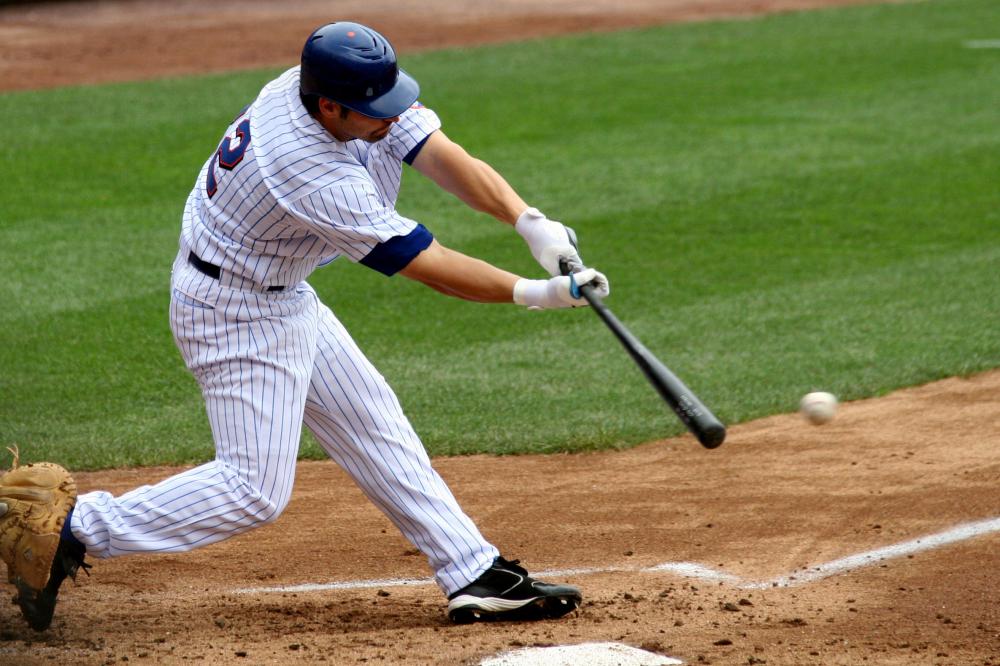
We've all heard the baseball metaphors for sex, whether we know it or not.  1st, 2nd, and 3rd base are the most popular, but there are more. You've probably heard of "scoring", "hitting a home run" and "striking out" as well.  This metaphor even runs deeper than the physical act of sex, and those who are gay or lesbian are referred to as "playing for the other team".


http://images.wisegeek.com/baseball-player-hit-ball.jpg          This metaphor places value in "getting to a base" but sex isn't something you can "get" and it shouldn't be the point of a relationship, the way scoring is the point of a game. Another way that this metaphor is flawed is that a baseball game is between two teams who are working against each other, and sex really shouldn't be that way because it implies that only one "wins." The formula of baseball also doesn't fit because you can't skip around from base to base, but have to follow a precise pattern, and even more than that, a set of rules where certain actions can give the other "team" an advantage over you, which really sends the wrong message about sex.  Finally, baseball is only for the young, able bodied players at the top tier of their level.  Any metaphor for sex should be all-inclusive, and account for everyone.

          Al Vernacchio, M.S.Ed., a high school teacher, teaches a class on sexuality, and has suggested an alternate, and better, metaphor for sex.  This is the pizza metaphor.


http://www.800degreespizza.com/wordpress/wp-content/themes/800degrees-vimeo/img/slides/woodfire-pizza-on-marble.jpg          People can eat pizza just because they want to, or decide that you don't want it at all. You don't have to schedule a time place for it, and there are many different kinds of pizza you can choose from.  You can choose 1 slice and feel full for the rest of the day, have a whole pie to yourself, or eat some, then come back for seconds later in the day.  You can also eat pizza with anyone you want.  You could have it with your partner, but alone is fine too. Pizza also comes with different toppings, and you can put whatever you want on it. The goal when you're with a partner, is to find a group of toppings you both like.

          The most important reason that pizza is a better metaphor for sex is that you would never order a pizza without discussing what you want on your pizza with the person you're sharing it with.  You talk about what you like, and what kinds of things you really don't like or won't eat. Communication and negotiation are very important before beginning a sexual relationship.  You should know your partner's preferences and they should know yours.  This will lead to a safer and, ultimately, more satisfying experience for both of you.

If you like this metaphor, and want to read the original article or visit the website, here is the link.  The article was written by Carly Dreyfus in 2010 to Scarleteen.com

Tuesday, December 11, 2012

Rudolf and the Grinch Teach Us How to Be Different

Rudolf and the Grinch Teach Us How to Be Different

We’re all different. Every single person on this planet is different, and sometimes, people exclude and bully people because of their differences. Sometimes it’s the color of skin, sometimes it’s clothes, sometimes it a sexual preference, and sometimes, it’s a glowing red nose. Rudolph the Red-Nosed Reindeer, a common holiday character, was excluded and made fun of because he was different than all the other reindeer. That isn’t to say all the other reindeer weren’t different than each other, because they undoubtedly were, Rudolph’s difference was just more pronounced. Because Rudolph’s difference was more pronounced, the other reindeer ostracized him, made him feel different in a bad way. They made him feel worthless. However, Rudolph was able to rise above the bullying he received from his peers; he stayed strong despite the bullying, and Santa recognized that Rudolph’s nose was a strength and something to be proud of, rather than to be ashamed of. Santa asks Rudolph to lead to his sleigh with his glowing nose, and all the other reindeer realize that they were wrong to have made fun of Rudolph because he was different. Differences aren't bad; in fact, they are often what make us special.
Another common holiday character is the Grinch, who was also bullied and ostracized by his peers. Many of us know the Grinch as a negative, hateful character, but he wasn’t always that way, and he certainly didn’t stay that way. The Grinch grew up as a small happy and loving boy, but, like Rudolph, he was made fun of because he looked different than everyone else. Other kids wouldn’t play with him, and even adults made fun of him. The Grinch eventually couldn’t take it anymore and he went up to live in the mountains. The Grinch felt so shunned by society that he decided to isolate himself even more. The Grinch lashed out at the society and the people that had put him through so much misery. The part of him that was so wounded appeared as hate and negativity.

One day, however, a small girl changes the Grinch through one small gesture; she reaches out her hand to him in kindness. She doesn’t treat him like a monster, but instead extends the same love and friendship that she believes everyone deserves. Her actions are transformational, and the Grinch changes back into the person he used to be - - inside, he becomes that kind and loving boy again.

Bullying isn’t always intentional, it can be as simple as making fun of a friend for wearing something they normally wouldn’t or not talking to certain people because we don’t want to associate ourselves with difference and also be left out. This form of exclusiveness is pervasive and hurts even the ones who are perpetuating it. Whenever we chose to pick on someone, talk behind their back, leave someone out, ignore someone, or even not stand up for someone we are not acting with integrity and we can feel it. I think this is especially true, when we are doing this to people who haven’t done anything to us or to people who are more vulnerable. We know it is wrong. When we continue to engage in this behavior or remain silent while others are saying things it does not feel good and it usually comes back to haunt us. So next time you see or do something that you feel is compromising your integrity, remember the story of Rudolf and of the Grinch, and do something different.

Bullying comes in a lot of forms, and often people are bullied because they are different than others. But everyone is different, in one way or another, and differences are something to be proud of, and not something to be ashamed of. Differences make our society innovative, diverse, and adaptive. Differences also challenge us to look outside of the box and open our eyes to new possibilities. However, this being said, it can be hard to hold up the banner of difference. It is difficult to embrace and feel proud of your own uniqueness when others around you do not celebrate it.
If you are ever being bullied or feel like you are being excluded
because you are different, or even if you want to offer a helping hand to help someone out of a bad situation and you want help knowing how to do it, feel free to call Teen Link.

Teen Link is a peer-to-peer confidential and non judgmental emotional help hotline, open every night from 6-10pm, at 1-866-833-6546. The volunteers on the lines are teens that are the same age as you and go through lots of training to be able to support callers around anything that might come up. At Teen Link we celebrate difference and respect the bravery it takes to be different. We also acknowledge the courage it takes to reach out for help, but we want you to know that you are not alone and we are always here to listen.

Friday, December 7, 2012

Under Pressure: How Our Bodies Respond to Stress and Tips to Fight Back


Under Pressure: How Our Bodies Respond to Stress and Tips on How to Fight Back

It is that time of year again. The holiday season is right around the corner, but it is hard to see the lights when our vision is clouded over by homework, final projects, and exams. Can’t it just all be done already!

Stress! You all know what I am talking about— that queezy feelings in your stomach, tight muscles, soar neck, or eye twitching sensation that comes over us when we are lacking on sleep, energy, and TIME!  We always think of stress as an emotion, when really it is something that affects our whole bodies.

I wanted to better understand what was happening in my body when stress started to take over and what I could do to make it more easy to manage.  So I decided to do some research and here is what I found.

The Nuts and Bolts of Stress

From my investigations I learned that stress is actually an evolutionary response that is there to help us respond and deal with challenges or changes in our environment. In this way, stress isn’t always a bad thing. It can give us the boost we need to get things done or to conserve our energy when times are tough. However, in the long term stress can start to lose its positive effects and really ware us out. So what exactly is happening in our bodies when we are under stress.

The Bodies Response to Stress
Whether it be a fight with your parents, an overwhelming amount of homework, or a recent break up, our brain is quick to sound the alarm, “ALERT, ALERT! We need back up!”  When we experience stress, signals are sent from our brain out into our bodies, activating our sympathetic nervous system and releasing chemicals called adrenaline and cortisol. When this happens, our body goes into action mode— our heart rate skyrockets, our blood pressure rises, we begin to sweat, our breath quickens, our muscles tighten, and all of our senses are on full alert. These changes put us into, what they call, “fight or flight” mode, so that we can react quickly and efficiently to difficult or dangerous situations.  This is called a stress response. When this stress response is triggered occasionally and we know how to use it to our advantage, it can be really helpful, but if these feelings of stress continue over a longer period of time, our bodies start to show some significant signs of stress overload.

Watch for the following symptoms or warning signs that stress is taking over:
ü       Memory and concentration problems
ü       Impulsiveness or irrational thinking
ü       Constant worry or anxiety
ü       Feeling irritable, moody, or wanting to lash out at others
ü       Aches and pains, muscle soreness, or overall fatigue
ü       Stomach aches, headaches, or dizziness
ü       Changes in eating or sleeping habits

Fighting Back
Being stressed out is not fun, and it can take a huge toll on our bodies, our minds, and our emotions. If stress has started to change from helping you to hurting you and you are noticing some of the warning signs above that you are on stress overload, here are some things that might help you get back on track:
  • Sleep- Even if you feel like you don’t have time or need to finish studying for a test the next day, just do it. Sleep deprivation will take away both your ability to concentrate and your ability to retain information, not to mention it will probably not make you a fun person to be around. So cut you losses and get a good nights sleep- 8 hours if possible.
  • Relax. Duh! That one is pretty obvious, but also something that we often take for granted. Take a second to just breathe, go on a walk, take a break, do whatever you need to do to unwind.  
  • Pay Attention to your Body. Are your muscles tense? Is your back soar? Are your eyes getting out of focus or droopy? If you aren’t sure squeeze your muscles together and then relax them. This is called progressive relaxation. Also, take a few deep breaths and let your body relax.
  • Reassess you priorities. It is really easy to over schedule yourself. Too much to do and too little time. Well, if that is the case then it might be time to reassess your priorities and put yourself and your needs higher up on your priority list. Because even if all of those other things seem fun and important, if you don’t have the energy to really do them the way you want to, then they probably won’t be enjoyable or successful. Fitting less things in and giving yourself time is really important.
  • Let go of the little things. Things don’t always go our way and we can’t always control things. We make mistakes and we are not perfect. Don’t let this stuff get to you. Instead, accept what you can and can’t do, give yourself a break or a hug, and enjoy your life.

We can’t avoid stress. It will happen. You have the power to see it and change it before it builds up to the point where it starts to hurt you. Listen to what your body is telling you, take care of yourself and show yourself some love. You deserve it.  

Tuesday, November 27, 2012

Calling Out Appropriation: Learning about the Native Community In Seattle

Native American history is one that is deeply rooted within the creation of our nation-- The fables, the history, the art not only give us life lessons, but draw a path for the future. Native American history has left an imprint on our country. It is important that we honor and celebrate this community in their own right. 
When we think of Native American Heritage, it is important to remember that the Native American community is incredibly diverse with varied traditions and cultural practices that represent different tribal nations. Main stream culture often does not accurately represent or respectfully depict Native Americans, and does not account for their diversity. Along with this, Native American symbols and tradition are often misused and abused by those who neglect to look into the culture and the history of the people they are representing. This practice is called cultural appropriation, which is the act of taking or appropriating the cultural ideas, expressions, artifacts, symbols, fashion, or history of a culture that is not one’s own. In this way, people have taken and continue to take pieces of Native American culture and tradition and use them for their own benefit without asking for the permission of the people these traditions come from.If you want to learn more about this, there is an awesome blog called Native Appropriations that gives current examples of how this process of appropriation continues to hurt and misrepresent the Native Community today. 
Instead of appropriating the beautiful, unique, and diverse aspects of different Native communities, I wanted to find more ways that we can celebrate, recognize and be aware of the communities in our area. And specifically, I wanted to find some things that Native Youth in our area are doing to create community and celebrate their culture.

Resources for Urban Native Youth In Seattle

Seattle has some pretty cool resources for Native youth. 

Seattle Clear Sky Native Youth Council is one of those organizations. Their main goals are to enhance tribal identities as well as increase personal growth and wellness. The meetings are a way for Native American Youth to engage in different cultural activities, as well as community building and social gatherings. They gather every Tuesday at the Heritage Cafeteria (1330 N. 9th Ave Seattle) from 6:00-8:30 pm. 

RedEagle Soaring Native Youth Theatre is another great way for urban Native youth to find community and empowerment through performing arts, music, and storytelling that celebrates their Native tradition, history, and culture.


To learn more about different non profits around the Seattle area that work to foster the urban Native community check on the The Native Circle at. http://thenativecircle.org/nonprofits/.

Monday, November 19, 2012

Trans Awareness Month


November is Trans Awareness Month
The LGBTQ community has been getting a lot of attention in the media lately, especially in Washington State with the legalization of same-sex marriage. However, there is a part of the community that isn’t talked about, and that is the Trans community.
Our society generally works under the assumption that everyone is cisgender- this means that all people are assigned a single gender at birth, and they live their lives as that single gender without any conflict.
This system excludes all Trans people. In its simplest form, someone who is Trans is assigned a gender at birth that they do not identify with. This can include people who are transgender, people who are genderqueer, people who are agender, etc.
People who are in the Trans community are frequently faced with discrimination and prejudice. In addition to this, there is a large amount of abuse and violence against those who are Trans.
To honor all those who have lost their lives, the 20th of November is Transgender Remembrance Day.
There will be an event for this in Seattle,  and the information is below:

Transgender Day of Remembrance event
Tuesday, November 20, 2012 at 7:00 PM

Ravenna United Methodist Church
5751 33rd Avenue N.E.

Seattle, Wa. 98105

 
This is a non-religious ceremony

All are welcome.

For further information, please e-mail Melissa at 
TDORSeattle@CenturyLink.net.

Lastly, if you need any resources or just want to talk, you can call Teen Link. We are open every night from 6-10pm pacific standard time. Our number is 1866TeenLink or 1866-833-6546. Every teen answering the phone line is an ally, and as always, we are an anonymous, confidential, and non-judgmental support line.

Saturday, October 13, 2012

Dating Violence: The Red Flags You NEED To Know to Protect Your Friends


Dating Violence
Red Flags of Teen Dating Violence
For friends…
  • Their boyfriend/girlfriend calls them names or puts them down in front of others.
  • Their boyfriend/girlfriend acts extremely jealous when they talk to friends of the opposite sex, even when it is completely innocent.
  • Your friend often cancels plans at the last minute, for reasons that sound untrue.
  • Your friend frequently apologizes for their boyfriend/girlfriend.
  • Your friend’s boyfriend/girlfriend is constantly checking up on them, calling or texting and demanding to know where they have been.
  • You’ve seen the boyfriend/girlfriend lose their temper, maybe even get violent when they’re mad.
  • Your friend is always worried about upsetting their boyfriend/girlfriend.
  • Your friend is giving up things that used to be important to them, such as spending time with friends or other activities, and is becoming more and more isolated.
  • Your friend’s weight, appearance or grades have changed dramatically.
  • Your friend has injuries they can’t explain, or the explanations they give don’t add up. 

What you can do if you know someone in an abusive relationship:
It’s important to realize that it isn’t easy to leave an abusive relationship. Make sure to keep in contact with your friend, since abusers often try to cut off their close relationships. They may be defensive when you bring up the topic, but try to show concern for your friend. Call the police if you think that your friend is in serious physical danger. If your friend leaves the abusive relationship, it is important to be very supportive to them.

If you have a friend who you notice is being abusive or controling to their partner take that step up and say something. Sitting by and watching our friends treat their significant others with disrespect isn't fun. By allowing this to happen we are signaling that is okay for them to do this kind of behavior. Domestic violence can ruin the lives of the victims, as well as their abusers. To break this cycle we need to step up and help people on both sides learn that this kind of behavior isn't okay before they do something that may permanently hurt their partner and themselves.

The National Domestic Violence Hotline is a confidential and anonymous hotline that is open 24 hours a day and 365 days a year. On their website, they are aware that computers could be monitored so they even give the option to quickly escape the page, and give them the hotline number:

National Domestic Violence Hotline at 1800799SAFE (7233) or 
TTY 18007873224

The website has resources for those seeking help in your specific area and have guidelines for safety planning, personal safety with an abuser, and guidelines for leaving an abusive relationship.


The Washington State Coalition Against Domestic Violence (WSCADV) is another resource for domestic violence. It assists domestic violence victims and their families. It also gives the option to quickly leave the website for those who are worried about computer monitoring. WSCADV informs prevention and education organizations, government agencies, the media and others about domestic violence.

800-562-6025 — Washington State Domestic Violence Hotline
http://www.wscadv.org/index.cfm

It provides a list of programs for victims of domestic violence depending on your county (in Washington State). It also offers links to helpful websites such as getmoneygetsafe.org, which is a website for survivors and advocates to help make ends meet and how to stay safe at work.

Also, if you need any other resources or just want to talk, you can also call Teen Link. We are open every night from 6-10pm pacific standard time. Our number is 1866TeenLink or 1866-833-6546.

Friday, October 5, 2012

Check yourself before you wreck yourself

I wanted to do some sort of research about drugs and alcohol and how it effects teens especially just to learn more about it. I found this really cool website that I think is a really good resource so I thought I’d share. It’s called Check Yourself.org and they basically say they are "a place for teens to check out where they are with drugs and alcohol." I spent a lot of time reading and watching some of their videos and it is actually really cool. They have good videos and info, but the coolest things are the "Moments of Truth" and "Stories" tabs. They are basically testimonials of teens that have done drugs/ alcohol and how addiction affected them or they talk about their recovery. Anyone can submit something to the Moments of Truth, which are stories of when someone realized they needed help (there are 1364 of them). The Stories are a collection of much longer real life drug stories from teens who work with the organization. They also have links to drug info and they have resources listed for getting help. Check it out.

Also, just for fun... you should probably see this. :)
http://www.youtube.com/watch?v=sHzdsFiBbFc